How to Find Reliable OEM Water Filter Parts
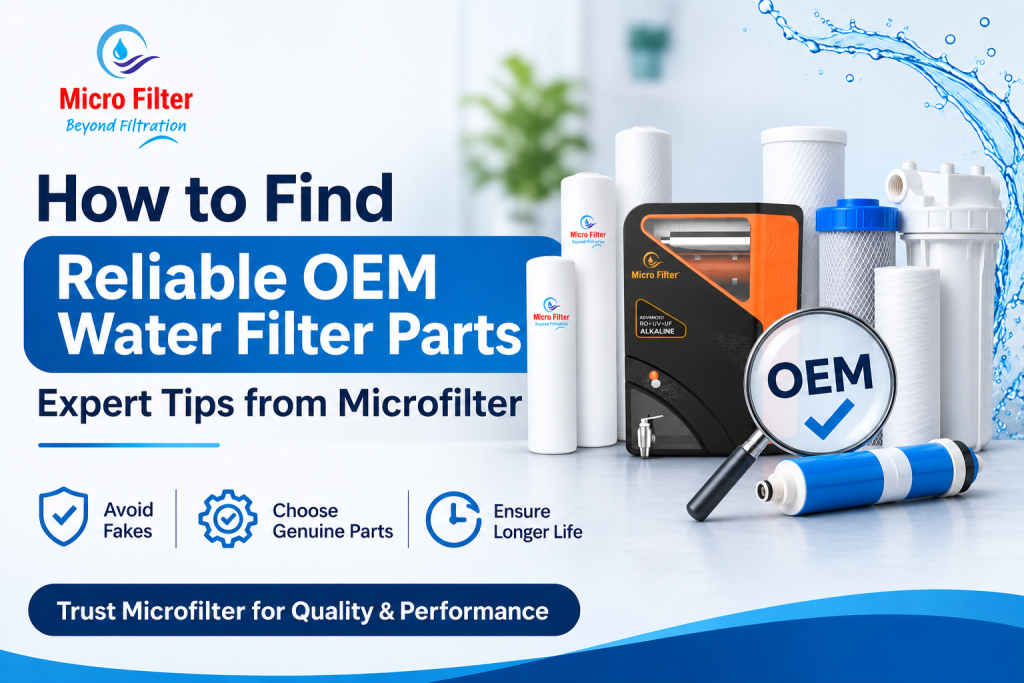
How to Find Reliable OEM Water Filter Parts A water filtration system is only as good as the components inside it. You can invest in an excellent filter but one poor-quality cartridge, valve or housing can lower output water quality, cause leaks and raise your maintenance costs. That is why choosing the right water filter parts matters as much as choosing the system itself. This guide explains what OEM parts are, why they matter, and how to find a supplier you can trust. What Are OEM Water Filter Parts? OEM stands for Original Equipment Manufacturer. OEM water filter parts are made to the same specifications as the components in your original system. They are designed for your exact model. Hence size, pressure rating and filtration performance all match. Common OEM parts include: Filter cartridges and sediment filters Activated carbon filters RO membranes O-rings, seals and gaskets Filter housings and sumps Valves, fittings, and connectors UV lamps and sleeves Pressure gauges and flow controls Why Reliable OEM Water Filter Parts Matter 1. Consistent Water Quality Genuine parts are built to remove contaminants such as sediment, chlorine and dissolved impurities at the rated efficiency. Poorly made substitutes may let contaminants through while still appearing to work. 2. Perfect Fit and Fewer Leaks Even a small difference in thread size or seal thickness can cause leaks. OEM parts are made for your system’s dimensions, so they install cleanly and hold under pressure. 3. Longer System Life Low-grade parts can clog early, strain pumps and damage other components. However Reliable parts protect the rest of your system. 4. Better Value Over Time Cheaper parts often cost more in the long run. Frequent replacements, downtime and repairs add up quickly, especially for commercial and industrial users. 5. Warranty Protection Many manufacturers require genuine parts to keep the warranty valid. Using unverified components can void it. How to Find Reliable OEM Water Filter Parts: 7 Practical Tips 1. Start With Your System’s Model Details Before you search, note down your system’s brand, model number, capacity and filtration stages. This information is usually on the unit, in the manual or on the invoice. The more precise your details, the easier it is to get compatible parts. 2. Buy From the Manufacturer or an Authorized Supplier The safest source is the original manufacturer or an authorized distributor. They can confirm compatibility and provide proper billing and support. Be careful with unknown online sellers offering unusually low prices. 3. Check Product Specifications and Certifications Reliable suppliers share clear technical details, such as micron rating, flow rate, material and pressure range. Where relevant, check for quality or safety certifications and look for materials that are safe for drinking water. 4. Look for Signs of Genuine Parts Genuine water filter parts typically come with: Clean, consistent packaging with a clear brand name Model or part numbers and batch details Good build quality, with even finish and secure seals Documentation or usage instructions If the packaging is unclear, the spelling is wrong or the print quality is poor, be cautious. 5. Ask About Warranty and After-Sales Support A trustworthy supplier like Microfilter will stand behind their parts. Ask about the warranty, return policy and technical support. Good support also helps you with installation questions and replacement schedules. 6. Compare Value, Not Just Price Price matters, but it should not be the only factor. Compare the part’s lifespan, filtration performance and supplier reliability. A slightly higher upfront cost often saves money by reducing replacements and breakdowns. 7. Read Reviews and Check the Supplier’s Track Record Look at how long the supplier has been in the water treatment industry, what customers say about them and whether they respond clearly to technical questions. A good supplier will answer your questions openly. Common Mistakes to Avoid When Buying Water Filter Parts Buying by appearance only. Parts that look similar may perform very differently. Ignoring compatibility. A part that almost fits can still damage your system. Choosing the lowest price. Unusually cheap parts are a common sign of poor quality or counterfeits. Skipping regular replacement. Even good parts need to be changed on schedule. Not asking for support. A quick technical query can prevent costly mistakes. How Often Should You Replace Water Filter Parts? Replacement timing depends on your water quality, usage, and the type of part. As a general guide: Sediment filters: every 3 to 6 months Carbon filters: every 6 to 12 months RO membranes: every 2 to 3 years UV lamps: about once a year Always follow your system manufacturer’s guidance and replace parts sooner if you notice changes in taste, odor, flow rate or water clarity. Why Choose Microfilter for Water Filter Parts? When you need dependable water filter parts, working with an experienced water treatment company makes the process simpler. Microfilter focuses on quality water filtration solutions and can help you choose parts that match your system and your water quality needs. With Microfilter, you can expect: Guidance on selecting the right parts for your system Quality-focused products suited to residential, commercial and industrial needs Responsive support for technical and compatibility questions Frequently Asked Questions What are OEM water filter parts? OEM water filter parts are components made to the original manufacturer’s specifications for a particular filtration system, ensuring correct fit and performance. Are OEM water filter parts better than generic ones? In most cases, OEM parts offer better compatibility, consistent quality and warranty protection. Some generic parts can work well, but their quality varies widely, so check specifications and the supplier carefully. How can I tell if a water filter part is genuine? Check the packaging quality, model and batch numbers and build quality and buy from the manufacturer or an authorized supplier. If you are unsure, ask the supplier to confirm compatibility. Where can I buy reliable water filter parts? Buy directly from the manufacturer or an authorized dealer. A trusted water treatment company like Microfilter can help you identify the correct parts for your system. How do I
Water Quality Risks for Newborns and Seniors
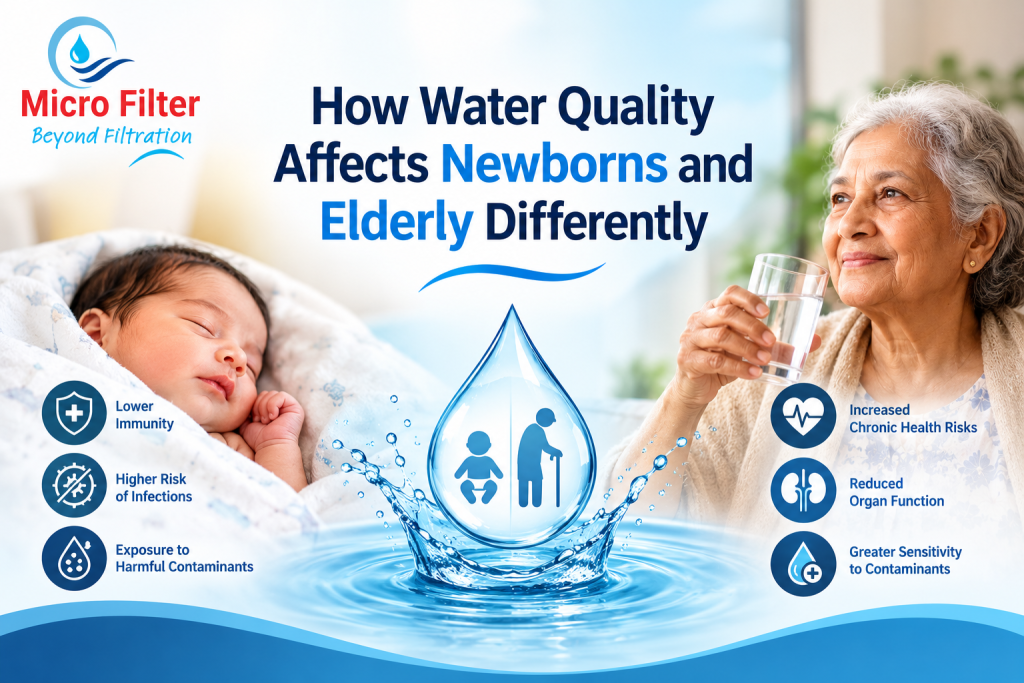
How Water Quality Affects Newborns and Elderly Differently Water is essential for life, but its quality plays an equally important role in protecting human health. While clean drinking water is necessary for everyone, newborns and elderly people can be particularly vulnerable to contaminants due to their different physiological needs and health conditions. Understanding the effects of poor water quality on infants and elderly individuals can help families make informed decisions about drinking water safety and filtration. From harmful microorganisms to chemical contaminants and excess dissolved minerals, unsafe water can pose different risks at different stages of life. Choosing an appropriate water treatment solution and maintaining it properly are important steps toward safer drinking water. Why Is Water Quality Important for Human Health? Drinking water may contain impurities that are not always visible, detectable by smell or noticeable through taste. Depending on the water source and local conditions these may include bacteria, viruses, nitrates, lead, arsenic, pesticides and excess dissolved solids. Although municipal water treatment reduces many risks, contamination can sometimes occur during distribution or storage. Groundwater and borewell water may also have varying mineral content and chemical contaminants. Regular water quality testing helps identify potential problems and determine whether additional treatment is necessary. Effects of Poor Water Quality on Infants and Elderly People Newborns and older adults may respond differently to unsafe drinking water. Their vulnerability depends on factors such as age, exposure, overall health and the type and concentration of contaminants. 1. How Poor Water Quality Affects Newborns Newborns have developing immune systems and immature organs, making them more vulnerable to certain infections and environmental contaminants. Potential health risks include: Waterborne infections: Disease-causing microorganisms can cause diarrhoea, vomiting and other gastrointestinal illnesses. Dehydration: Infants can become dehydrated quickly when they experience diarrhoea or vomiting. Nitrate exposure: High nitrate levels in drinking water used to prepare infant formula can cause methemoglobinemia, a serious condition that reduces the blood’s ability to carry oxygen. Chemical contamination: Certain contaminants, including lead, may affect neurological development and other aspects of health. Parents should use water that meets applicable drinking water standards when preparing infant formula. Follow the formula manufacturer’s instructions and healthcare professional’s advice, particularly for newborns and premature babies. Boiling water can kill many disease-causing microorganisms, but it does not remove nitrate, lead, arsenic or other dissolved chemicals. In some cases, boiling can concentrate these contaminants as water evaporates. 2. How Poor Water Quality Affects Elderly People As people age, changes in immune function, kidney function and the body’s ability to regulate fluid balance can increase vulnerability to some water-related health risks. Existing conditions and medications may also influence how an older adult responds to contaminated water. Potential health risks include: Gastrointestinal infections: Contaminated water can cause illnesses that may be more difficult to recover from in older adults. Dehydration: A reduced sense of thirst can make it harder for some elderly people to recognize when they need fluids. Chemical exposure: Long-term exposure to certain contaminants, such as lead or arsenic, can contribute to serious health problems. Complications from existing conditions: Older adults with kidney disease or other chronic conditions may need individualized advice about hydration and water composition. Access to safe drinking water, appropriate hydration and regular water quality monitoring can help reduce avoidable risks. Newborns vs. Elderly: Understanding the Difference Factor Newborns Elderly people Main vulnerability Developing immune system and organs Age-related changes and existing health conditions Major concern Infections and specific contaminants such as nitrates Infections, dehydration, and cumulative chemical exposure Hydration needs Breast milk or correctly prepared infant formula provides necessary fluids Regular fluid intake, adjusted to individual medical needs Water safety priority Safe water for formula preparation and feeding Consistently safe drinking water and suitable hydration Recommended action Follow pediatric guidance and test questionable water sources Monitor water quality and seek medical guidance when needed Both age groups benefit from safe water, but the precautions required may differ. Common Water Contaminants That Families Should Know About Understanding common contaminants can help households select suitable water treatment methods. 1. Bacteria and Viruses Microorganisms may enter water through sewage contamination, damaged pipelines, or unsafe storage. Depending on the organism, exposure can cause gastrointestinal infections and other illnesses. Treatment options may include properly designed UV disinfection, chlorination, or other validated disinfection methods. The correct approach depends on the water source and its contamination risks. 2. Nitrates Nitrates can enter groundwater through agricultural runoff, fertilizers and sewage. Elevated nitrate levels are a particular concern when water is used to prepare infant formula. A laboratory test is recommended if nitrate contamination is suspected. Ordinary boiling is not an effective way to remove nitrates. 3. Heavy Metals Lead and arsenic can occur in water because of natural geological conditions, industrial pollution, or plumbing materials. Long-term exposure can have serious health consequences. Treatment must be selected according to the contaminant and its measured concentration. Not every household filter removes every heavy metal. 4. Excess Dissolved Solids and Minerals Water may contain dissolved salts, calcium, magnesium, iron and other substances. Some affect taste, hardness, scaling, or the suitability of water for particular uses. Total dissolved solids (TDS) measurements can help assess the overall level of dissolved substances, but TDS alone cannot establish whether water is safe to drink. Testing for specific contaminants may still be necessary How Can Families Improve Drinking Water Safety? Taking a few practical steps can help households reduce the risks associated with poor water quality. Test Your Water Regularly Start by identifying your water source, whether municipal supply, borewell, tanker, or another source. Use a qualified laboratory to test for contaminants relevant to that source and your local conditions. Choose the Right Water Filtration System Different filtration technologies address different water quality problems. Sediment filters: Help remove suspended particles such as sand, silt and rust. Activated carbon filters: Can reduce chlorine, unpleasant tastes and certain organic compounds, depending on the filter design. Reverse osmosis (RO): Can reduce many dissolved salts and selected contaminants when the system is appropriately designed and
What Is TDS in Water and What’s the Ideal Level for Drinking?

You have probably seen “TDS” on a water purifier box or must have heard it in an advertisement. But what does TDS in water actually means and what TDS values should you look for in the water you drink every day? This guide covers what TDS is, the ideal TDS level for drinking water, what happens when it is too high or too low, and how to fix it? What Is TDS in Water? TDS stands for Total Dissolved Solids. It is the total amount of dissolved substances in water, measured in milligrams per litre (mg/L) or parts per million (ppm). The two units are effectively the same for drinking water. These dissolved substances include: Minerals: calcium, magnesium, potassium and sodium etc. Salts: chlorides, sulphates and bicarbonates etc. Trace elements and contaminants: nitrates, fluoride, iron? Water picks these up as it passes through rocks, soil and pipes. That is why groundwater, such as borewell water usually has a different TDS from river or reservoir water or supplied by a municipality. How Is TDS Measured? TDS is measured with a digital TDS meter. The meter checks how well the water conducts electricity, because dissolved salts and minerals raise conductivity. It then converts this into a ppm reading. A TDS meter has one big limitation. It tells you the quantity of dissolved solids, not the type of solids. A reading of 200 ppm could be healthy calcium and magnesium however it could include harmful contaminants. Bacteria, viruses, pesticides and many chemicals are not shown by a TDS reading either. A detailed lab test is the only way to know exactly what is in your water. Ideal TDS Level for Drinking Water Below is the widely used TDS scale, based on WHO guidance: TDS Level (ppm) Water Quality Below 50 Very low mineral content; may taste flat 50 – 150 Ideal for drinking 150 – 300 Excellent, good taste and minerals 300 – 500 Acceptable, but on the higher side 500 – 900 Poor taste; treatment recommended 900 – 1,200 Poor; not recommended for regular drinking Above 1,200 Unacceptable In short: the ideal TDS level for drinking water is between 50 and 150 ppm and anything up to 300 ppm is considered good. Is High TDS Water Harmful? High TDS is not always a direct health hazard by itself, but it is a warning sign. When TDS crosses 500 ppm you may notice: Salty, bitter or metallic taste Hard water problems: white scale on taps and kettles and dull, dry skin and hair Reduced appliance life: scaling damages geysers, boilers, washing machines and industrial equipment Possible health concerns: if the high reading comes from nitrates, arsenic, lead or excess fluoride, long-term use can affect kidneys, digestion and overall health Cloudy or unpleasant tea, coffee and cooked food For industries, hospitals, hotels, restaurants and housing societies, high TDS also means higher maintenance costs and inconsistent product quality. Is Very Low TDS Water Bad? Yes, it can be. Water with TDS below 30–50 ppm has almost no natural minerals. It can taste flat and drinking it as your only water source over the long term may mean you miss out on calcium and magnesium. This is a common issue when an RO system is run without a mineral balancing feature. Purer is not always better. Balanced is better. How to Reduce TDS in Water The right method depends on how high is your TDS and what is causing it. Reverse Osmosis (RO): The most effective method for reducing dissolved solids. A semi-permeable membrane removes up to 90–95% of TDS, along with many contaminants. Distillation: Effective, but slow and energy-intensive. It is mainly used for lab or specialised needs. Deionization (DI): Used in industrial and laboratory settings where ultra-pure water is required. Water softeners: These reduce hardness (calcium and magnesium) but do not fully reduce total TDS. Choose the Right Purification Based on Your TDS Below 200 ppm: UV or UF purification is usually enough 200 – 500 ppm: RO with a TDS controller so essential minerals are retained Above 500 ppm: Full RO purification or a customised treatment setup Commercial and industrial use: A properly designed treatment plant based on a full water analysis Not sure which one fits? Get your water tested first. Guessing often means overspending on the wrong system or under-treating water that needs more. Why Choose Microfilter for Your Water Treatment Needs? Every water source is different, so a single ready-made solution rarely works. Microfilter helps homes, businesses and industries get the right treatment for their water starting with understanding what is actually in it. With Microfilter, you get: Solutions customised matched to your water quality, not a one-size-fits-all product kind. Customised Systems built for the needs of homes, commercial spaces and industries. Guidance from a team of experts that understands water treatment, not just sales. Support you can rely on for installation and after-sales service as well. Frequently Asked Questions 1. What is a safe TDS level for drinking water? A TDS below 300 ppm is considered good and 50–150 ppm is ideal. 2. Is 100 TDS water good for drinking? Yes. 100 ppm is within the ideal range and gives a good balance of taste and minerals. 3. Is 500 TDS water safe to drink? 500 ppm is the upper acceptable limit under Indian standards. It may taste poor, so treatment is recommended, especially if long-term use is planned. 4. Does boiling water reduce TDS? No. Boiling kills microorganisms but does not remove dissolved solids. It can actually concentrate them slightly as water evaporates. 5. Can a TDS meter tell me if my water is completely safe? No. It measures dissolved solids only. It cannot detect bacteria, pesticides or many other chemical contaminants. Get a full lab test for a complete picture. Final Thoughts TDS is a useful first indicator of your water quality, but it is only one part of the story. Aim for 50–150 ppm for drinking, treat water above 500 ppm and never rely on
Dual Intensity Rainwater Filters Explained: How They Work & Why Intensity Matters
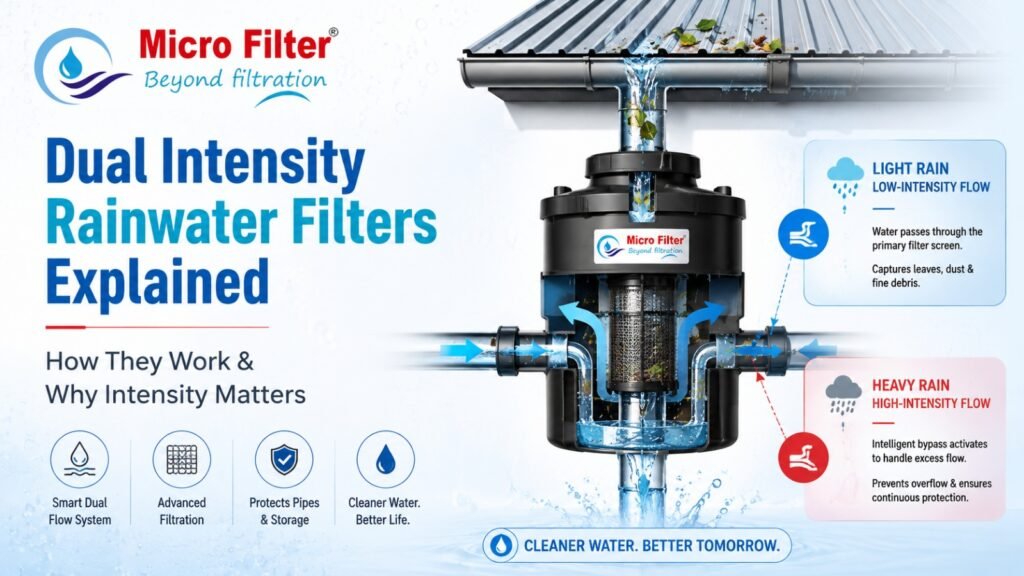
Rainwater harvesting is most effective when the filtration system can respond to the changing nature of rainfall. From light showers to sudden heavy downpours, the amount and speed of water flowing from a rooftop can vary significantly. A Dual Intensity Rainwater Filter is designed to handle these changing flow conditions efficiently, helping separate dirt and debris while allowing valuable rainwater to be collected for storage, reuse or groundwater recharge. Micro Filter’s, Dual Intensity Rainwater Filters use a combination of cohesive and centrifugal forces to separate dirt and debris from incoming rainwater while allowing filtered water to move towards storage, reuse or groundwater recharge systems. What Is a Dual Intensity Rainwater Filter? A Dual Intensity Rainwater Filter is a specially designed for rainwater harvesting, capable of functioning effectively during different rainfall conditions. During light rainfall, water may enter the harvesting system slowly and in relatively small quantities. During a heavy monsoon shower, however, a much larger quantity of water can reach the filter within a short period. A conventional filtration system that performs adequately at one flow rate may struggle when the intensity changes significantly. Dual intensity filtration technology is designed to manage this variation so that rainwater passing through it can continue to be separated from leaves, dust, dirt and other rooftop debris even as rainfall conditions change. This makes the system particularly useful in locations where rainfall can quickly shift from a drizzle to a heavy downpour. How Does a Dual Intensity Rainwater Filter Work? The process can be understood in a few simple stages. 1. Rainwater Is Collected From the Roof Rain falling on the terrace or rooftop enters the gutter and drainage network. The water can carry contaminants such as: Leaves Dust Sand Small twigs Organic debris Other particles deposited on the roof Instead of allowing this material to directly enter a water storage tank or groundwater recharge structure, this water should be directed through the rainwater filter. 2. Water Enters the Filter As soon as rainwater enters the filter, its movement is controlled by the internal filter design. Rather than depending on an electrical pump to create filtration pressure, the system operates through gravity principle. Micro Filter’s Dual Intensity Rainwater Harvesting Filter uses a gravity-driven system that does not require an external source of power. 3. Centrifugal Force Assists Separation The movement of water inside the filter also generates centrifugal action. As water changes direction inside the system, heavier dirt and debris can be separated from the cleaner water stream. The combined action of cohesive and centrifugal forces forms the working principle behind the Dual Intensity filtration technology. 4. Filtered Water Is Redirected Once the larger debris and unwanted material have been separated, the filtered rainwater can be directed according to the rainwater harvesting design. It may be sent to: Rainwater storage tanks Groundwater recharge systems Recharge wells Landscaping or gardening systems Utility water storage Agricultural applications Other suitable non-potable reuse systems The final use should always be determined by the required water-quality standard and any additional treatment required for that specific application. What Makes the Filter “Dual Intensity”? The key advantage is its ability to work effectively across different rainfall intensities instead of being designed only around one narrow flow condition. During relatively light rainfall, the filter must still efficiently capture useful water. During heavier rainfall, the amount and velocity of incoming water increase dramatically. The system must then accommodate the higher flow without simply becoming a blockage point in the rainwater harvesting network. Dual intensity technology addresses this challenge by using the hydraulic behaviour of the incoming water together with its filtration design. That adaptability is particularly relevant to Indian monsoon conditions, where rainfall is highly variable. Open-Ended Design Helps Reduce Clogging One of the challenges with traditional filters is accumulated debris. Leaves, mud and organic matter can gradually obstruct conventional filtration media. Once blocked, the filter may require frequent cleaning or may restrict water flow during an important rainfall event. Micro Filter’s system uses an open-ended, non-clogging approach designed to prevent stagnation and maintain water flow. This becomes especially valuable during periods of intense rain when a restricted filter could otherwise result in significant water loss. Why Use a Dual Intensity Filter for Rooftop Rainwater Harvesting design? A rainwater harvesting system is only useful when it can collect water reliably when the rain actually arrives. A Microfilter’s Dual Intensity Rainwater Filter provides several advantages for this purpose. Effective Under Changing Rainfall The biggest benefit is the ability to work through variations in rainfall instead of being optimized only for a single type. Gravity-Based Operation The system does not require electricity for normal filtration, which makes it suitable for zero cost sustainable rainwater harvesting operations.. Reduced Maintenance Self-cleaning and automatic flushing reduce the manual effort associated with cleaning of accumulated debris. Compact Installation Micro Filter’s system is designed to be compact and wall-mounted, allowing it to be integrated into rooftop rainwater collection systems without requiring a large dedicated filtration chamber. 5. Flexible Pipe Connections The filter allows flexible pipe orientation, making installation easier across different building layouts. Choosing the Right Rainwater Harvesting Filter Not every building has the same requirement. Before selecting a filter, the following factors should be considered: Rooftop catchment area Local rainfall intensity Downpipe diameter and layout Maximum expected water flow Intended use of filtered rainwater Available installation space Storage or groundwater recharge capacity Correct sizing is particularly important. A small residential roof and a large industrial warehouse can generate dramatically different volumes of runoff during the same rainfall event. Selecting the filtration system according to the catchment area and expected rainfall ensures that the complete harvesting system works as intended. Build a Smarter Rainwater Harvesting System With Micro Filter Every monsoon delivers a valuable water resource directly to our rooftops. The challenge is capturing it efficiently. Microfilter’s Dual Intensity Rainwater Harvesting Filters combine gravity-driven operation, cohesive and centrifugal filtration principles, an open-ended design and self-cleaning functionality to create a practical solution for modern rainwater harvesting systems. Whether the goal
Why Your RO Membrane Needs Extra Attention During the Rainy Season | RO Membrane Maintenance
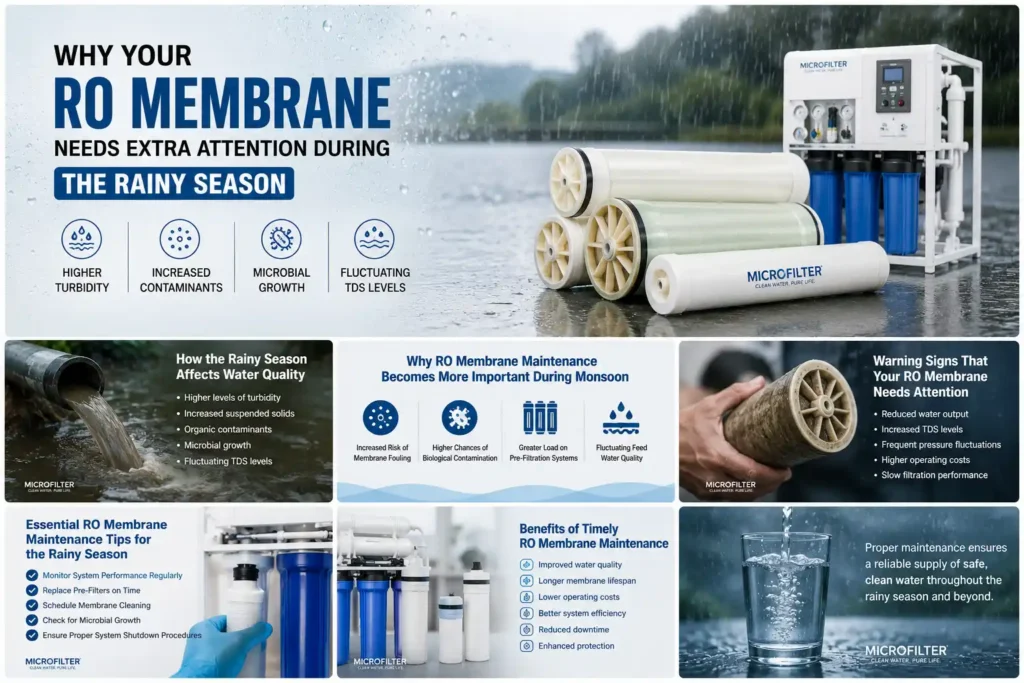
The rainy season brings welcome relief from the summer heat, but it also introduces several new challenges for water purification systems. Increased humidity, fluctuating water quality, higher levels of suspended particles and microbial contamination place additional stress on your reverse osmosis (RO) system. This makes RO membrane maintenance more important than ever during the monsoon months. The RO membrane is the heart of any water purification system. It removes dissolved salts, contaminants, bacteria and other impurities to ensure safe and clean drinking water. However, seasonal changes in water quality can impact its performance and lifespan if proper care is not taken. How the Rainy Season Affects Water Quality During the monsoon, rainwater runoff carries soil, organic matter, industrial pollutants and other contaminants into rivers, lakes, and groundwater sources. As a result, the raw water entering RO systems often contains: Higher levels of turbidity Increased suspended solids Organic contaminants Microbial growth Fluctuating level of Total Dissolved Solids (TDS) These changes can increase the workload on the RO membrane and other filtration components. Why RO Membrane Maintenance Becomes More Important During Monsoon 1. Increased Risk of Membrane Fouling One of the biggest challenges during the rainy season is membrane fouling. Excess suspended particles, mud, silt and organic matter can accumulate on the membrane surface, reducing water flow and filtration efficiency. Without regular RO membrane maintenance, fouling can lead to: Reduced water production Higher operating pressure Increased energy consumption Shortened membrane life Routine monitoring and cleaning help prevent excessive buildup and maintain optimal performance. 2. Higher Chances of Biological Contamination Warm temperatures combined with increased moisture create ideal conditions for microbial growth. Bacteria, algae and biofilms can develop within water treatment systems if they are not properly maintained. Biofouling is particularly harmful because it forms a protective layer on the membrane surface, making contaminants more difficult to remove. Proper sanitization and periodic inspections are essential parts of effective RO membrane maintenance during the monsoon season. 3. Greater Load on Pre-Filtration Systems Pre-filters act as the first line of defense for RO membranes. During the rainy season, sediment filters often become clogged more quickly due to increased levels of suspended solids in the feed water. When pre-filters fail to perform efficiently, the RO membrane is exposed to larger particles that can accelerate wear and tear. Regular replacement of sediment and carbon filters helps protect the membrane and improve system efficiency. 4. Fluctuating Feed Water Quality Monsoon rainfall can significantly alter the quality of incoming water. Sudden changes in turbidity, TDS levels and contaminant concentrations can place additional stress on RO systems. Consistent testing of feed water parameters allows operators and homeowners to identify potential issues early and make necessary adjustments. This proactive approach is a key aspect of successful RO membrane maintenance. Essential RO Membrane Maintenance Tips for the Rainy Season Monitor System Performance Regularly Keep track of important performance indicators such as: Water flow rate Rejection rate Operating pressure TDS levels Any noticeable drop in performance may indicate membrane fouling or damage. Replace Pre-Filters on Time Sediment and carbon filters should be inspected more frequently during the monsoon. Replacing clogged filters helps reduce the contaminant load reaching the membrane. Schedule Membrane Cleaning Periodic membrane cleaning removes accumulated deposits and restores system performance. Cleaning schedules may need to be increased during periods of poor water quality. Check for Microbial Growth Inspect storage tanks, pipelines, and filter housings for signs of microbial contamination. Proper sanitization helps prevent biofouling and protects water quality. Ensure Proper System Shutdown Procedures If the RO system remains unused for extended periods, follow recommended shutdown procedures to prevent bacterial growth and membrane deterioration. Warning Signs That Your RO Membrane Needs Attention During the rainy season, watch for these common indicators: Reduced water output Unpleasant taste or odor in water Increased TDS levels in purified water Frequent pressure fluctuations Higher operating costs Slow filtration performance Addressing these issues early can prevent expensive repairs and membrane replacement. Benefits of Timely RO Membrane Maintenance Regular maintenance offers several advantages: Improved water quality Longer membrane lifespan Lower operating costs Better system efficiency Reduced downtime Enhanced protection against seasonal water quality changes Investing in preventive maintenance is often far more cost-effective than replacing damaged membranes prematurely. Conclusion The rainy season can significantly impact water quality and place additional stress on reverse osmosis systems. Increased sediment, organic contaminants and microbial activity make RO membrane maintenance a critical part of ensuring consistent purification performance. By monitoring system health, replacing pre-filters regularly, cleaning membranes when necessary and staying alert to warning signs, users can protect their RO systems from monsoon-related challenges. Proper maintenance not only extends membrane life but also ensures a reliable supply of safe, clean water throughout the rainy season and beyond.