
Rainwater harvesting is most effective when the filtration system can respond to the changing nature of rainfall. From light showers to sudden heavy downpours, the amount and speed of water flowing from a rooftop can vary significantly. A Dual Intensity Rainwater Filter is designed to handle these changing flow conditions efficiently, helping separate dirt and debris while allowing valuable rainwater to be collected for storage, reuse or groundwater recharge.
Micro Filter’s, Dual Intensity Rainwater Filters use a combination of cohesive and centrifugal forces to separate dirt and debris from incoming rainwater while allowing filtered water to move towards storage, reuse or groundwater recharge systems.
Table of Contents
ToggleWhat Is a Dual Intensity Rainwater Filter?
A Dual Intensity Rainwater Filter is a specially designed for rainwater harvesting, capable of functioning effectively during different rainfall conditions.
During light rainfall, water may enter the harvesting system slowly and in relatively small quantities. During a heavy monsoon shower, however, a much larger quantity of water can reach the filter within a short period.
A conventional filtration system that performs adequately at one flow rate may struggle when the intensity changes significantly.
Dual intensity filtration technology is designed to manage this variation so that rainwater passing through it can continue to be separated from leaves, dust, dirt and other rooftop debris even as rainfall conditions change.
This makes the system particularly useful in locations where rainfall can quickly shift from a drizzle to a heavy downpour.
How Does a Dual Intensity Rainwater Filter Work?
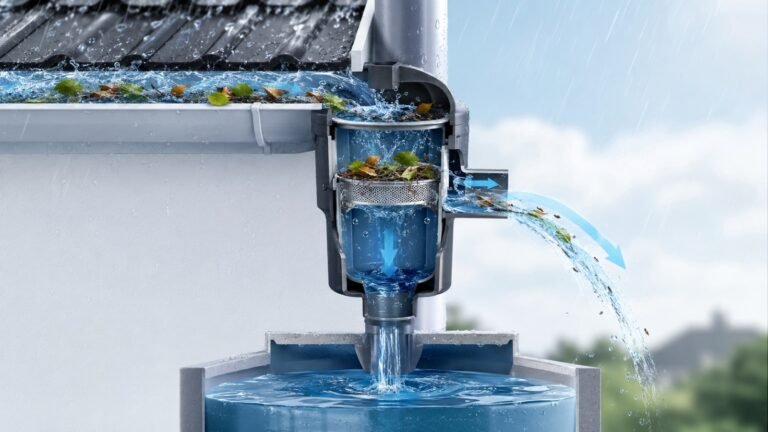
The process can be understood in a few simple stages.
1. Rainwater Is Collected From the Roof
Rain falling on the terrace or rooftop enters the gutter and drainage network.
The water can carry contaminants such as:
- Leaves
- Dust
- Sand
- Small twigs
- Organic debris
- Other particles deposited on the roof
Instead of allowing this material to directly enter a water storage tank or groundwater recharge structure, this water should be directed through the rainwater filter.
2. Water Enters the Filter
As soon as rainwater enters the filter, its movement is controlled by the internal filter design.
Rather than depending on an electrical pump to create filtration pressure, the system operates through gravity principle. Micro Filter’s Dual Intensity Rainwater Harvesting Filter uses a gravity-driven system that does not require an external source of power.
3. Centrifugal Force Assists Separation
The movement of water inside the filter also generates centrifugal action.
As water changes direction inside the system, heavier dirt and debris can be separated from the cleaner water stream.
The combined action of cohesive and centrifugal forces forms the working principle behind the Dual Intensity filtration technology.
4. Filtered Water Is Redirected
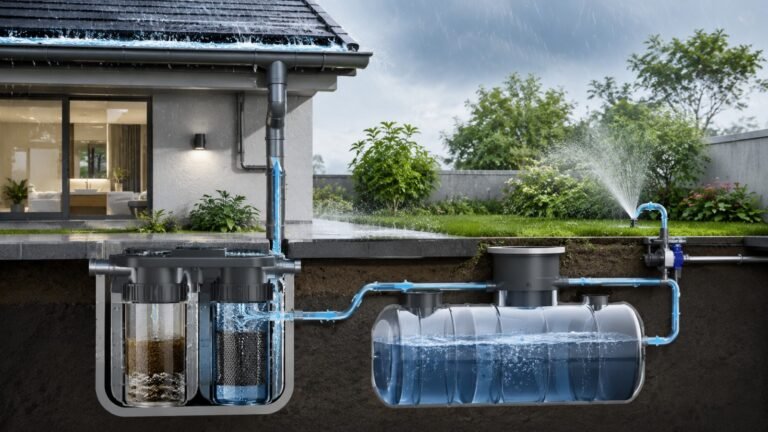
Once the larger debris and unwanted material have been separated, the filtered rainwater can be directed according to the rainwater harvesting design.
It may be sent to:
- Rainwater storage tanks
- Groundwater recharge systems
- Recharge wells
- Landscaping or gardening systems
- Utility water storage
- Agricultural applications
- Other suitable non-potable reuse systems
The final use should always be determined by the required water-quality standard and any additional treatment required for that specific application.
What Makes the Filter “Dual Intensity”?
The key advantage is its ability to work effectively across different rainfall intensities instead of being designed only around one narrow flow condition.
During relatively light rainfall, the filter must still efficiently capture useful water.
During heavier rainfall, the amount and velocity of incoming water increase dramatically. The system must then accommodate the higher flow without simply becoming a blockage point in the rainwater harvesting network.
Dual intensity technology addresses this challenge by using the hydraulic behaviour of the incoming water together with its filtration design.
That adaptability is particularly relevant to Indian monsoon conditions, where rainfall is highly variable.
Open-Ended Design Helps Reduce Clogging
One of the challenges with traditional filters is accumulated debris.
Leaves, mud and organic matter can gradually obstruct conventional filtration media. Once blocked, the filter may require frequent cleaning or may restrict water flow during an important rainfall event.
Micro Filter’s system uses an open-ended, non-clogging approach designed to prevent stagnation and maintain water flow.
This becomes especially valuable during periods of intense rain when a restricted filter could otherwise result in significant water loss.
Why Use a Dual Intensity Filter for Rooftop Rainwater Harvesting design?
A rainwater harvesting system is only useful when it can collect water reliably when the rain actually arrives.
A Microfilter’s Dual Intensity Rainwater Filter provides several advantages for this purpose.
Effective Under Changing Rainfall
The biggest benefit is the ability to work through variations in rainfall instead of being optimized only for a single type.
Gravity-Based Operation
The system does not require electricity for normal filtration, which makes it suitable for zero cost sustainable rainwater harvesting operations..
Reduced Maintenance
Self-cleaning and automatic flushing reduce the manual effort associated with cleaning of accumulated debris.
Compact Installation
Micro Filter’s system is designed to be compact and wall-mounted, allowing it to be integrated into rooftop rainwater collection systems without requiring a large dedicated filtration chamber.
5. Flexible Pipe Connections
The filter allows flexible pipe orientation, making installation easier across different building layouts.
Choosing the Right Rainwater Harvesting Filter
Not every building has the same requirement.
Before selecting a filter, the following factors should be considered:
- Rooftop catchment area
- Local rainfall intensity
- Downpipe diameter and layout
- Maximum expected water flow
- Intended use of filtered rainwater
- Available installation space
- Storage or groundwater recharge capacity
Correct sizing is particularly important.
A small residential roof and a large industrial warehouse can generate dramatically different volumes of runoff during the same rainfall event. Selecting the filtration system according to the catchment area and expected rainfall ensures that the complete harvesting system works as intended.
Build a Smarter Rainwater Harvesting System With Micro Filter
Every monsoon delivers a valuable water resource directly to our rooftops. The challenge is capturing it efficiently.
Microfilter’s Dual Intensity Rainwater Harvesting Filters combine gravity-driven operation, cohesive and centrifugal filtration principles, an open-ended design and self-cleaning functionality to create a practical solution for modern rainwater harvesting systems.
Whether the goal is rainwater storage, reuse or groundwater recharge, choosing the right filtration technology can help make the entire harvesting system more reliable and easier to maintain.
Planning a Rainwater Harvesting System?
Talk to Microfilter experts to identify the right Dual Intensity Rainwater Harvesting Filter for your rooftop area, rainfall conditions and water conservation requirements.
Microfilter Polymers Ltd.
W-19, MIDC Hingna, Nagpur – 440016
Contact: +91 98231 83355
Email: in**@*********er.org