
The rainy season brings welcome relief from the summer heat, but it also introduces several new challenges for water purification systems. Increased humidity, fluctuating water quality, higher levels of suspended particles and microbial contamination place additional stress on your reverse osmosis (RO) system. This makes RO membrane maintenance more important than ever during the monsoon months.
The RO membrane is the heart of any water purification system. It removes dissolved salts, contaminants, bacteria and other impurities to ensure safe and clean drinking water. However, seasonal changes in water quality can impact its performance and lifespan if proper care is not taken.
Table of Contents
ToggleHow the Rainy Season Affects Water Quality
- Higher levels of turbidity
- Increased suspended solids
- Organic contaminants
- Microbial growth
- Fluctuating level of Total Dissolved Solids (TDS)
Why RO Membrane Maintenance Becomes More Important During Monsoon
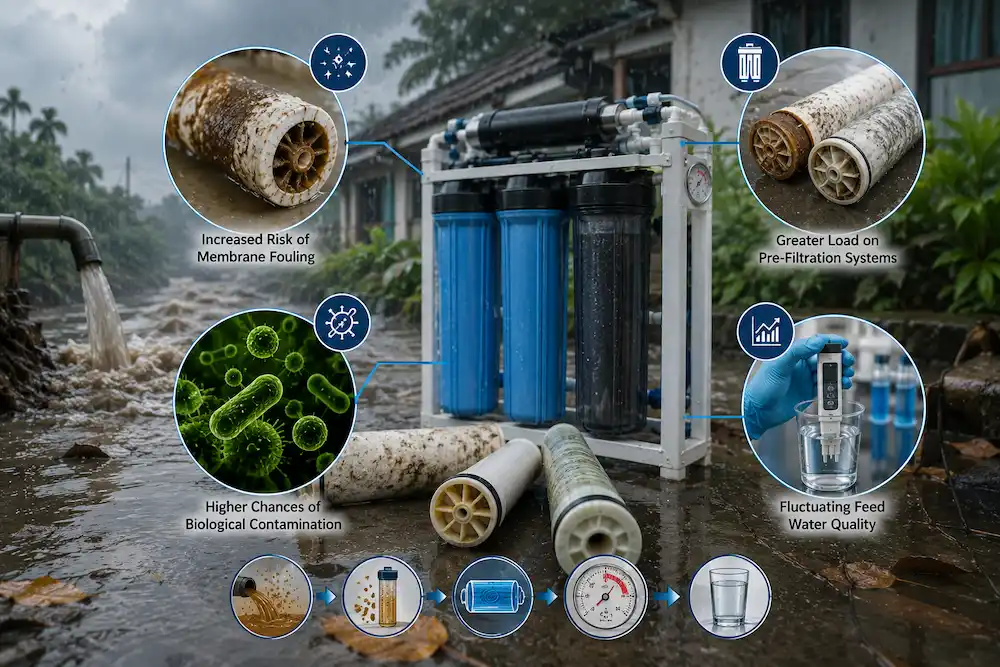
1. Increased Risk of Membrane Fouling
One of the biggest challenges during the rainy season is membrane fouling. Excess suspended particles, mud, silt and organic matter can accumulate on the membrane surface, reducing water flow and filtration efficiency.
Without regular RO membrane maintenance, fouling can lead to:
- Reduced water production
- Higher operating pressure
- Increased energy consumption
- Shortened membrane life
Routine monitoring and cleaning help prevent excessive buildup and maintain optimal performance.
2. Higher Chances of Biological Contamination
Warm temperatures combined with increased moisture create ideal conditions for microbial growth. Bacteria, algae and biofilms can develop within water treatment systems if they are not properly maintained.
Biofouling is particularly harmful because it forms a protective layer on the membrane surface, making contaminants more difficult to remove. Proper sanitization and periodic inspections are essential parts of effective RO membrane maintenance during the monsoon season.
3. Greater Load on Pre-Filtration Systems
Pre-filters act as the first line of defense for RO membranes. During the rainy season, sediment filters often become clogged more quickly due to increased levels of suspended solids in the feed water.
When pre-filters fail to perform efficiently, the RO membrane is exposed to larger particles that can accelerate wear and tear. Regular replacement of sediment and carbon filters helps protect the membrane and improve system efficiency.
4. Fluctuating Feed Water Quality
Monsoon rainfall can significantly alter the quality of incoming water. Sudden changes in turbidity, TDS levels and contaminant concentrations can place additional stress on RO systems.
Consistent testing of feed water parameters allows operators and homeowners to identify potential issues early and make necessary adjustments. This proactive approach is a key aspect of successful RO membrane maintenance.
Essential RO Membrane Maintenance Tips for the Rainy Season
Monitor System Performance Regularly
Keep track of important performance indicators such as:
- Water flow rate
- Rejection rate
- Operating pressure
- TDS levels
Any noticeable drop in performance may indicate membrane fouling or damage.
Replace Pre-Filters on Time
Sediment and carbon filters should be inspected more frequently during the monsoon. Replacing clogged filters helps reduce the contaminant load reaching the membrane.
Schedule Membrane Cleaning
Periodic membrane cleaning removes accumulated deposits and restores system performance. Cleaning schedules may need to be increased during periods of poor water quality.
Check for Microbial Growth
Inspect storage tanks, pipelines, and filter housings for signs of microbial contamination. Proper sanitization helps prevent biofouling and protects water quality.
Ensure Proper System Shutdown Procedures
If the RO system remains unused for extended periods, follow recommended shutdown procedures to prevent bacterial growth and membrane deterioration.
Warning Signs That Your RO Membrane Needs Attention
During the rainy season, watch for these common indicators:
- Reduced water output
- Unpleasant taste or odor in water
- Increased TDS levels in purified water
- Frequent pressure fluctuations
- Higher operating costs
- Slow filtration performance
Addressing these issues early can prevent expensive repairs and membrane replacement.
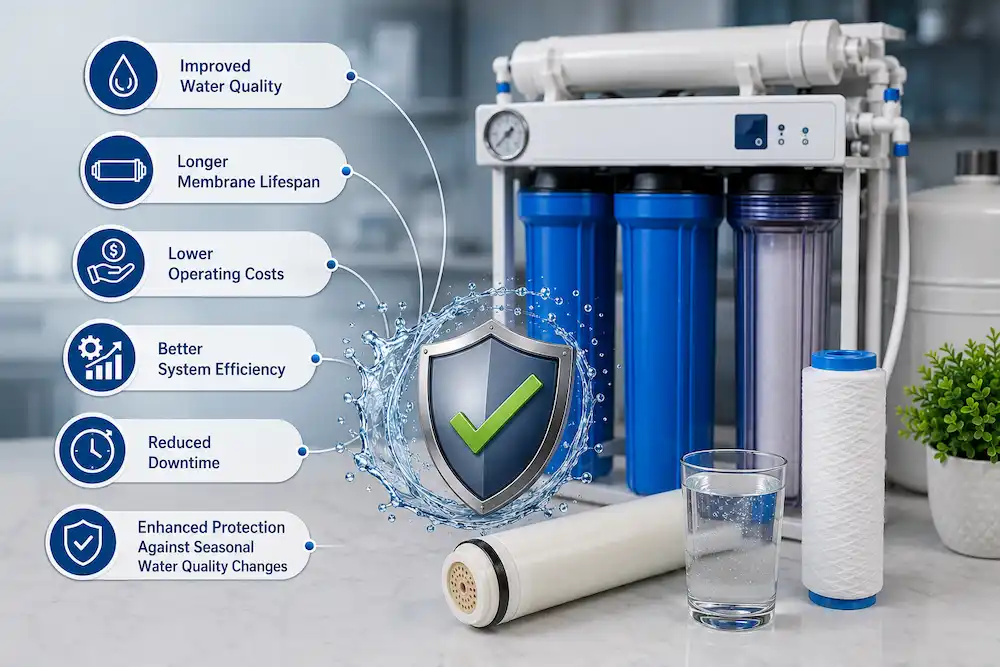
Benefits of Timely RO Membrane Maintenance
Regular maintenance offers several advantages:
- Improved water quality
- Longer membrane lifespan
- Lower operating costs
- Better system efficiency
- Reduced downtime
- Enhanced protection against seasonal water quality changes
Investing in preventive maintenance is often far more cost-effective than replacing damaged membranes prematurely.
Conclusion
The rainy season can significantly impact water quality and place additional stress on reverse osmosis systems. Increased sediment, organic contaminants and microbial activity make RO membrane maintenance a critical part of ensuring consistent purification performance.
By monitoring system health, replacing pre-filters regularly, cleaning membranes when necessary and staying alert to warning signs, users can protect their RO systems from monsoon-related challenges. Proper maintenance not only extends membrane life but also ensures a reliable supply of safe, clean water throughout the rainy season and beyond.