Commercial RO Plant
Advanced Water Purification Solutions for Small-Scale Applications
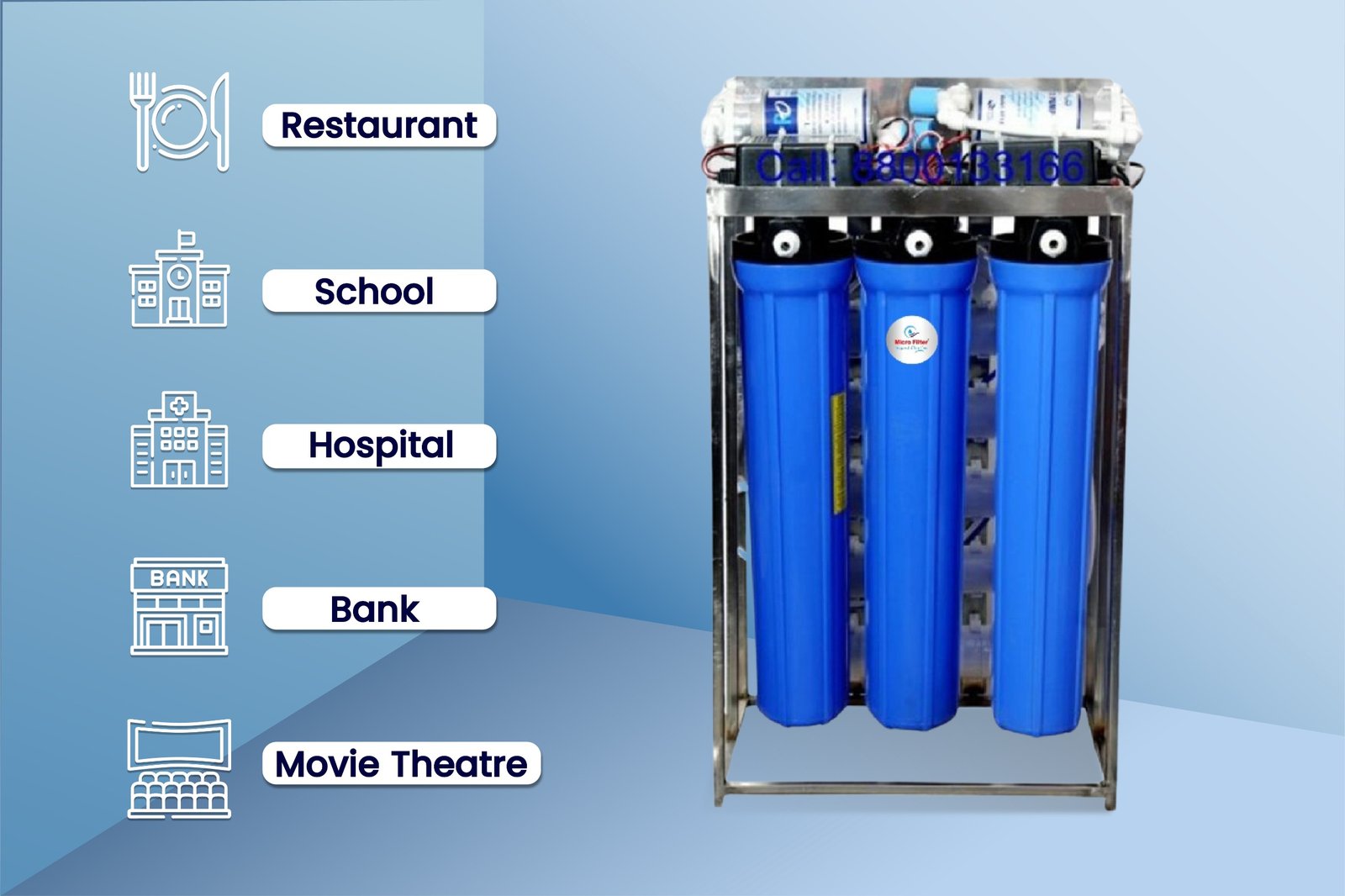
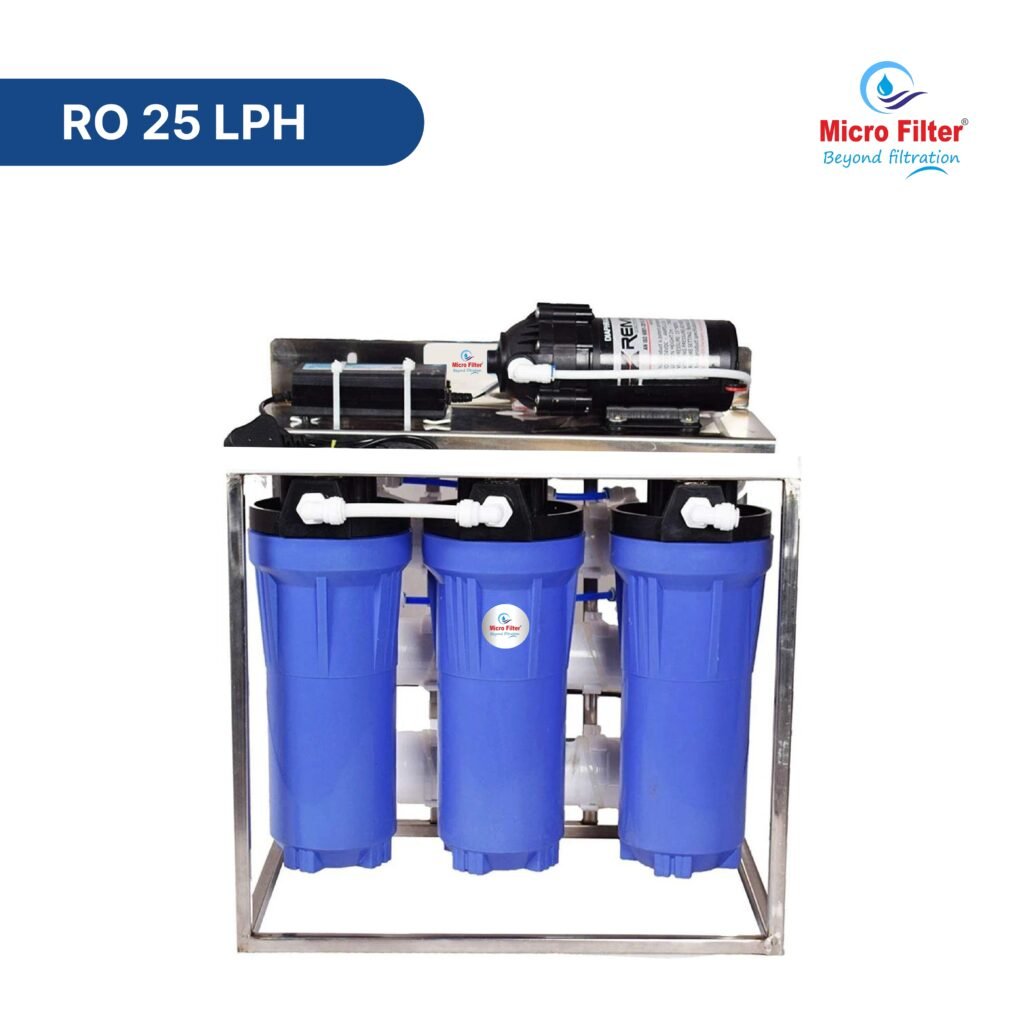
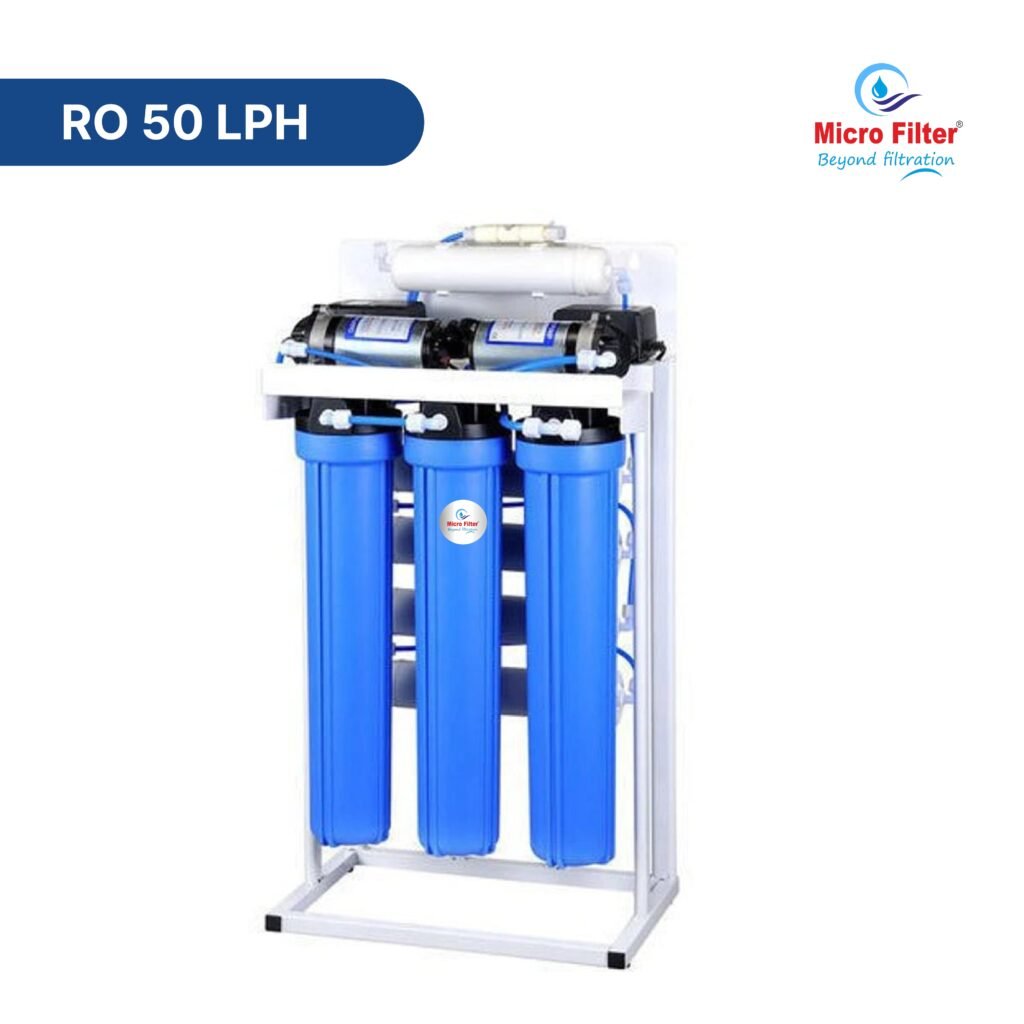
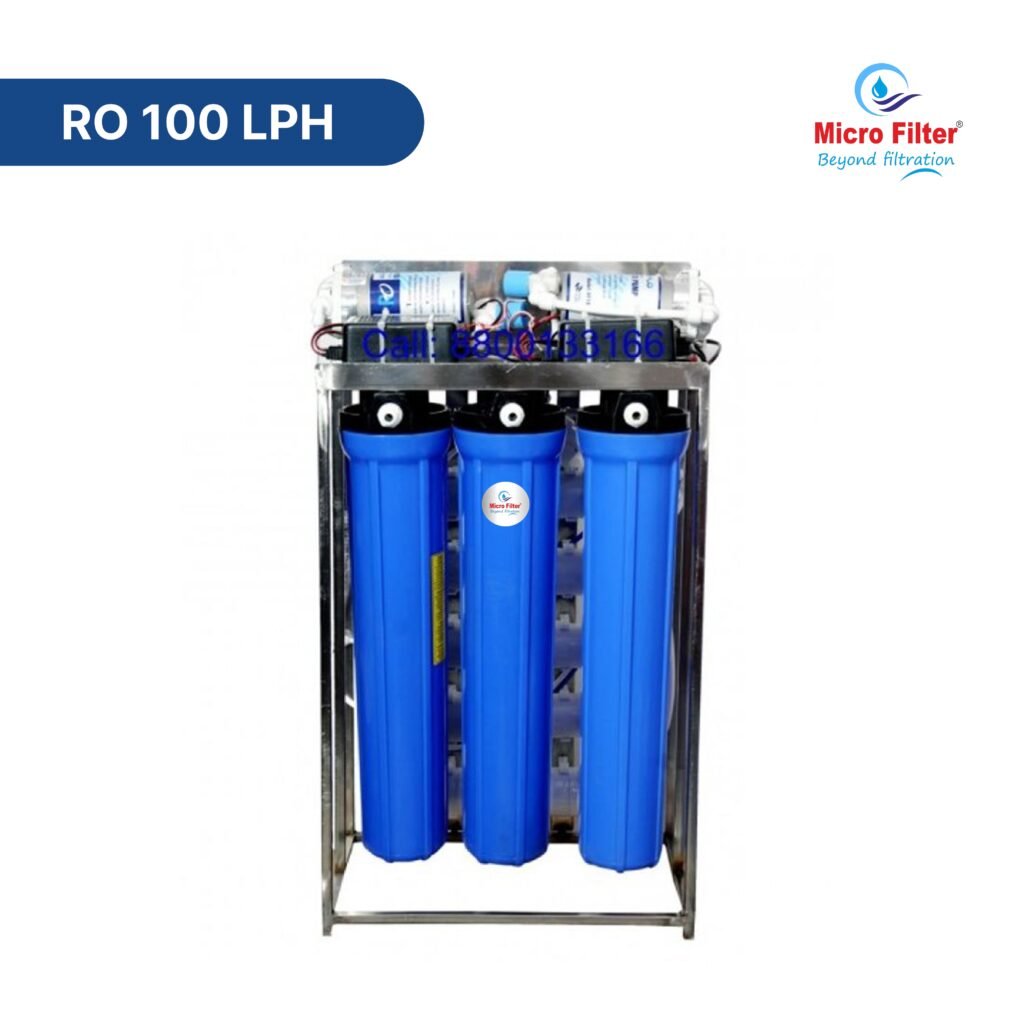
The Micro Filter Commercial RO Plant is a compact, state-of-the-art water purification solution from Microfilter Polymers Limited, designed to deliver clean, safe and great-tasting water for offices, restaurants, cafés, schools, hospitals and small businesses.
With capacities ranging from 25 LPH to 100 LPH, these RO plants utilize advanced Reverse Osmosis (RO) technology to remove up to 99% of dissolved solids, heavy metals, bacteria and viruses. The multi-stage filtration process starts with a pre-filter for sediments,
followed by an activated carbon filter for chlorine and odors and an RO membrane for deep purification. Additional treatments like UV sterilization and post-carbon polishing ensure water that is crisp, refreshing and safe for daily use.
Easy to operate and maintain, the Micro Filter Commercial RO Plant features automated controls for seamless operation and auto-shutoff for convenience and efficiency. Its compact design and energy-efficient components make it ideal for environments where space and reliability matter.
Ideal for: Offices, restaurants, cafés, schools, hospitals and other commercial spaces.
Commercial RO Plant Built for Scale, Priced for ROI
Microfilter delivers high-capacity reverse osmosis plants from 100 LPH to 10,000 LPH — engineered for hotels, hospitals, factories and commercial complexes across India.
99%
TDS & Contaminant Removal
100 - 10,000
LPH Capacity Range
What Is a Commercial RO Plant?
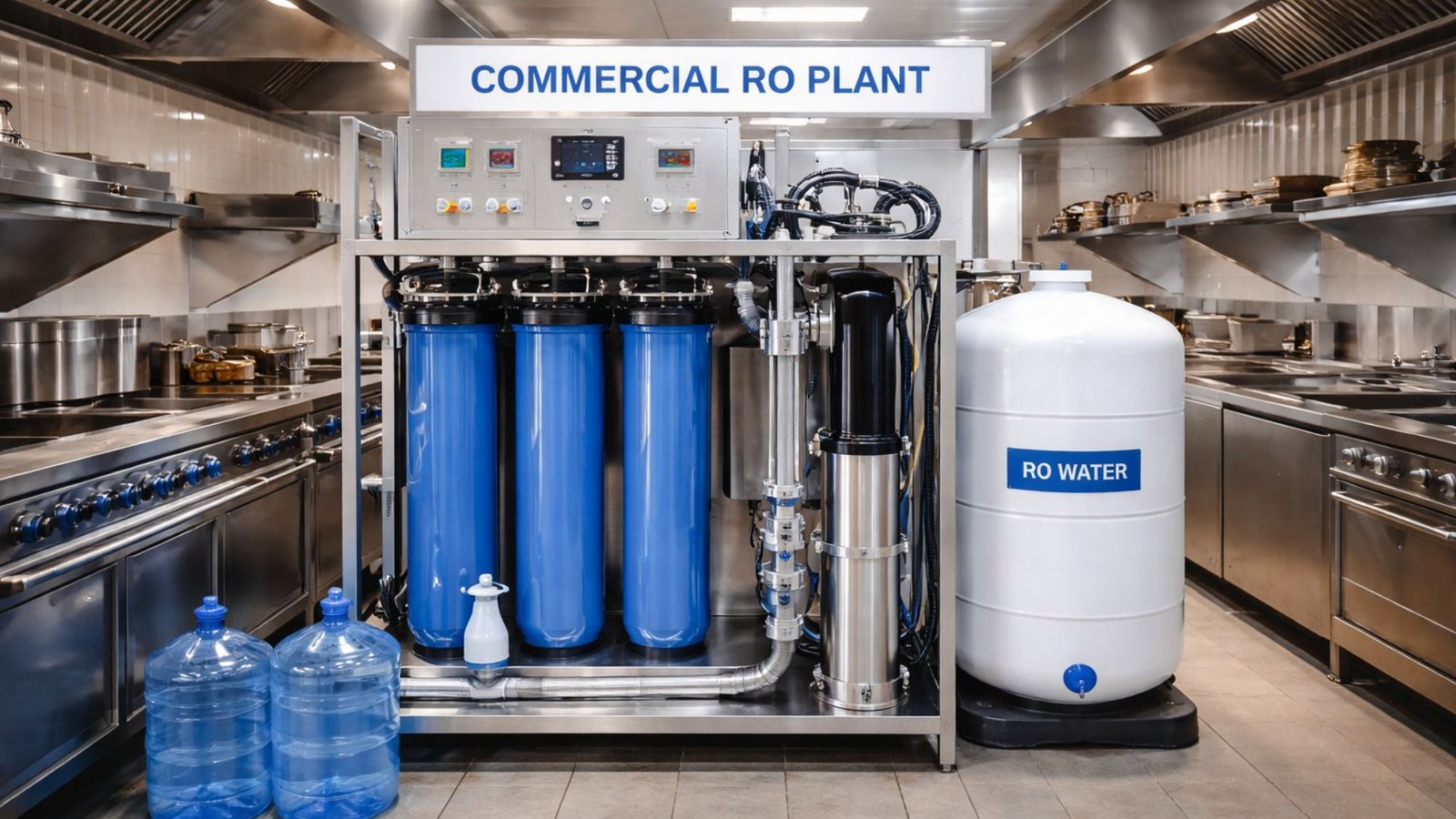
A commercial RO plant is a large-scale reverse osmosis water purification system designed to produce hundreds to thousands of litres of purified water per hour. Unlike a household purifier, it is engineered for continuous operation in demanding commercial and industrial environments.
The system forces raw water through a semi-permeable membrane under high pressure, physically removing dissolved salts, heavy metals, bacteria, viruses and other contaminants. The result is water that meets WHO, BIS and ISO drinking water standards, consistently and reliably.
How It Works — Step by Step
Sediment and activated carbon filters remove large particles, chlorine and organic matter to protect the RO membrane.
Chemical dosing prevents mineral scaling on the membrane surface, extending its lifespan.
Raises water pressure (typically 8–15 bar) to force water through the RO membrane effectively.
Removes 90–99% of dissolved solids, heavy metals, bacteria and microorganisms.
UV lamps or polishing filters provide a final disinfection stage before storage or use.
Key Benefits of a Commercial RO Plant
Removes Up to 99% Contaminants
Dramatically Cuts Water Costs
Energy-Efficient Operation
Regulatory Compliance
Eco-Friendly & Sustainable
Smart & Automated Control
How to Choose the Right Commercial RO Plant
Picking the wrong capacity or build material is one of the most common and costly mistakes buyers make. Here are the six factors that matter most.
Frequently Asked Questions — Commercial RO Plant
A commercial RO plant is a large-scale water purification system based on reverse osmosis technology. It is used in hotels, hospitals, factories, schools and commercial complexes to produce hundreds to thousands of litres of purified water per hour. It removes dissolved salts, heavy metals, bacteria and other harmful contaminants to deliver water that meets BIS and WHO standards.
Divide your estimated daily water consumption (in litres) by 8–10 hours of operation to get the required LPH capacity. As a general guide: a 100 LPH plant suits 80 –100 people; a 500 LPH plant suits a small factory or large office; a 1,000 –2,000 LPH plant suits hospitals or industrial operations; and 5,000 –10,000 LPH plants are for large manufacturers, textile units or municipal supply.
Commercial RO plants are designed for businesses like hotels, hospitals, offices and schools that need purified drinking water at moderate scale (100–2,000 LPH). Industrial RO plants operate at higher capacities (2,000–20,000+ LPH) and are built for continuous 24/7 operation in manufacturing environments where water is used as a process input — such as in textiles, power plants and pharmaceuticals. Industrial plants typically have heavier builds, more pre-treatment stages and greater automation.
Traditional RO plants have a recovery rate of 60–75%, meaning 25–40% of feed water is discharged as brine (reject water). Modern commercial RO plants from reputable manufacturers include energy-recovery systems and high-recovery membranes that improve this ratio. The reject water can also be reused for gardening, cooling towers or floor cleaning — making the overall system more water-efficient.
Regular maintenance includes: replacing pre-filters every 6–12 months; cleaning or replacing RO membranes every 1–2 years; checking and topping up anti-scalant dosing chemicals; inspecting high-pressure pumps, valves and fittings; and sanitising storage tanks. Most manufacturers offer Annual Maintenance Contracts (AMC) that cover scheduled servicing, emergency callouts and spare parts, ensuring your plant operates at peak performance.
Get a Free Commercial RO Plant Quote
Tell us your daily water requirement, location and water source. Our engineers will design the right system and send you a detailed, no-obligation proposal within 24 hours.